TL;DR:
A 13.25x17.75x1 air filter actually measures 13.25 x 17.75 x 0.75 inches. Only the depth is rounded on the label. Match the size exactly, and never substitute a "close enough" size like 14x18, because gaps let unfiltered air bypass the filter.
We write about attic insulation because it is one of the biggest efficiency upgrades a Jupiter home can make. Homeowners who finish that work often ask why their new filter looks thinner than the label. The answer matters, because a filter that doesn't seal quietly undoes part of the savings.
Key Takeaways
Actual size: 13.25 x 17.75 x 0.75 inches. Only the depth is rounded up on the label.
When a filter size includes decimals, the face numbers are real. Don't round them.
In humid Jupiter homes, a loose filter lets dust bypass filtration and coat the evaporator coil.
What Is the Actual Size of a 13.25x17.75x1 Air Filter?
The actual size of a 13.25x17.75x1 air filter is 13.25 x 17.75 x 0.75 inches. When we compared the label against Filterbuy's published specifications, the length and width matched exactly. Only the depth differed, at three-quarters of an inch instead of a full inch.
Whole-number sizes like 16x25x1 are often trimmed on every side. Fractional sizes are usually labeled at their true face dimensions. That precision is what lets a filter seat flush and keep delivering cleaner air free of dust and pollen.
Nominal vs Actual Air Filter Size: What's the Difference?
Nominal size is the rounded size used to name and sell a filter. Actual size is its true measurement. Racks are built to nominal dimensions, and the filter needs a little room to slide in.
Our rule of thumb, the "decimal tell": if a size has decimals, like 13.25 or 17.75, the face numbers are real and only the depth is rounded. The usual advice to "round up to the nearest inch" works for whole-number sizes, but here it would send you to a 14x18 that won't fit.
Why Is My Air Filter Smaller Than Labeled?
Your air filter is smaller than labeled because manufacturers build in clearance. A filter cut to exactly 1 inch deep would jam in a 1-inch rack; at 0.75 inch, it slides in and still fills the opening.
“After more than a decade of manufacturing filters in the U.S., the size question we hear most is why a 1-inch filter measures three-quarters of an inch. That depth is deliberate. It's the clearance that lets the filter slide in without forcing. On sizes like 13.25x17.75x1, we keep the face at its true dimensions so the frame seals against the rack. If a filter doesn't fit, we exchange it. Nobody should have to bend one to make it work.”
The real warning sign is a visible gap, or a filter that must be bent to fit. The EPA's Guide to Air Cleaners in the Home advises choosing a filter that fits snugly, so air does not leak around it.
Is 0.75-Inch Air Filter Depth Normal?
Yes. A depth of 0.75 inch is standard for filters sold as 1-inch nominal. On this size, that quarter inch of depth is nearly all the clearance the filter has, which is why the face must match exactly. Some cabinets are built for deeper media filters that last longer, so confirm your slot depth before ordering.
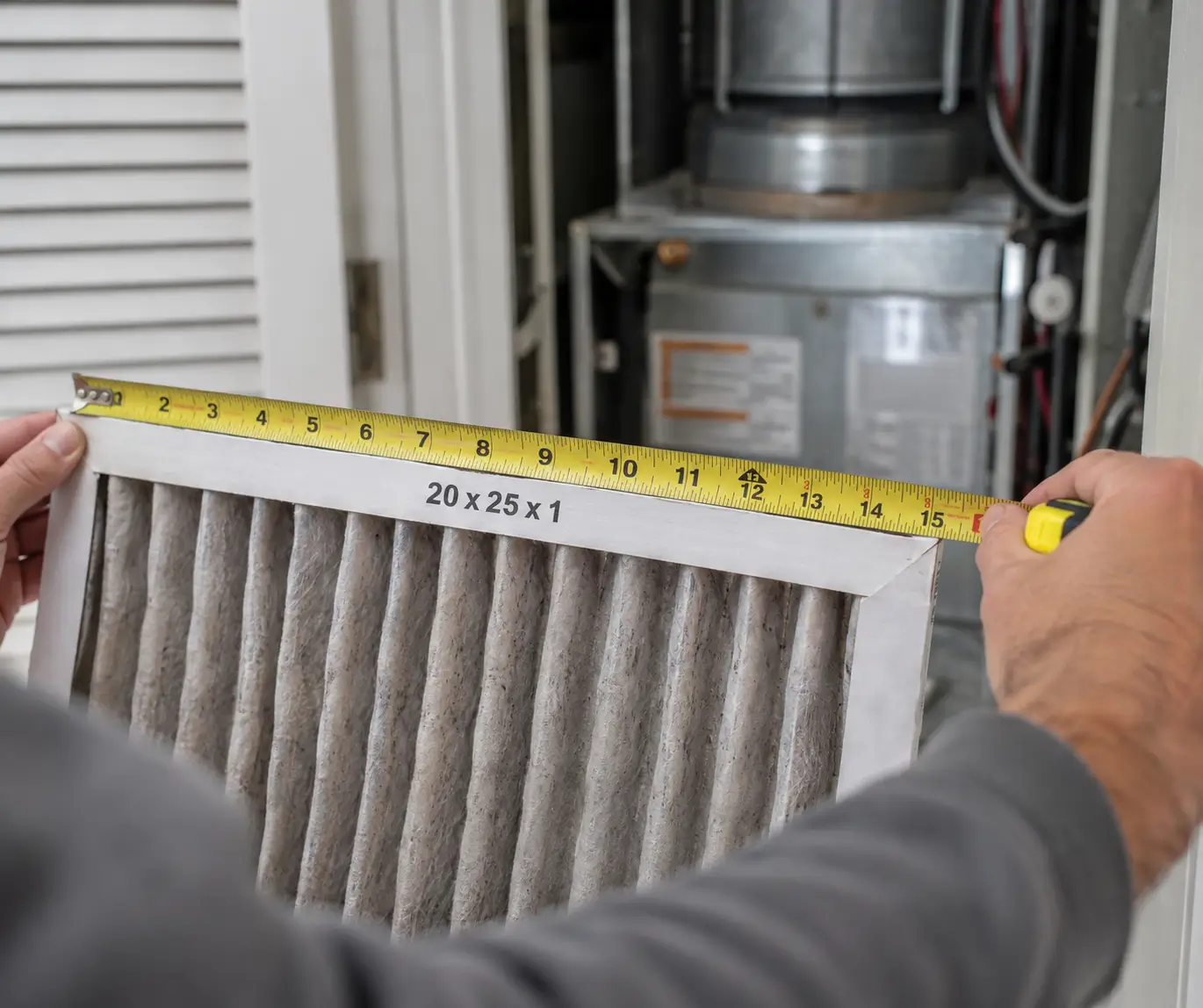
How to Measure a Furnace Filter the Right Way
Measuring takes two minutes. In South Florida, the "furnace filter" usually sits in the air handler or behind a return grille in a wall or ceiling.
Turn off the system so the blower does not pull unfiltered air while the slot is open.
Remove the old filter and note the airflow arrow direction.
Read the frame for the printed nominal size.
Measure if the label is missing, to the nearest 1/8 inch.
Record measurements without rounding the face. A 13.25-inch width rounded to 13 or 14 inches points to the wrong filter.
Check the slot for a 1-inch opening and a flush fit.
Write the size on the cabinet with a permanent marker.
Pro tip, the daylight test: once the new filter is in and the cover is closed, shine a
Measuring an Odd-Size Filter When There's No Label
Odd sizes like 13.25x17.75 often turn up in older air handlers and condo return grilles.
Measure the old filter first. A face of about 13.25 x 17.75 inches with a depth near 0.75 inch points to a 13.25x17.75x1 filter.
No old filter? Measure the slot opening, then check the owner's manual or data plate. If no stock size matches, Filterbuy makes custom-size filters.
Do not size down. A smaller common filter leaves gaps where unfiltered air slips past.
Replacing equipment soon? If you are planning an HVAC replacement, ask the contractor to record the filter size, and confirm that a professional HVAC installation includes an accessible, well-sealed filter rack.
Troubleshooting a 13.25x17.75x1 Filter That Doesn't Fit Right
A gap shows on one side. The filter is likely a smaller stand-in, such as a 13x17.5. Don't tape the gap; tape fails in attic heat. Order the exact size. Filterbuy exchanges filters that don't fit at no charge.
You have to push hard, or the filter bows. Check the track for debris or a bent rail before blaming the filter. Never trim a frame to fit.
The frame shows two sets of numbers. The set ending in 0.75 is the actual size. Order by the other one.
A ceiling-return filter drops out when the AC shuts off. Airflow holds it in place while the blower runs. Use the grille's retaining clips so it can't fall.
Spare filters warp before you use them. A humid garage softens frames. Store spares flat, indoors, in their original packaging.
Why a Snug Filter Fit Matters in Jupiter, FL Homes
Humid air that bypasses the filter carries dust onto the wet evaporator coil, where it sticks and cuts efficiency. In damp months, a well-seated filter can also help with mold spores that thrive in Florida humidity.
A detail most guides miss: a fractional-size filter has almost no face clearance, so frame quality matters. A flimsy frame that softens in a humid attic can bow and open the gap you measured to avoid. Look for frames built to resist heat and humidity; Filterbuy, for example, uses beverage board frames designed for exactly that.
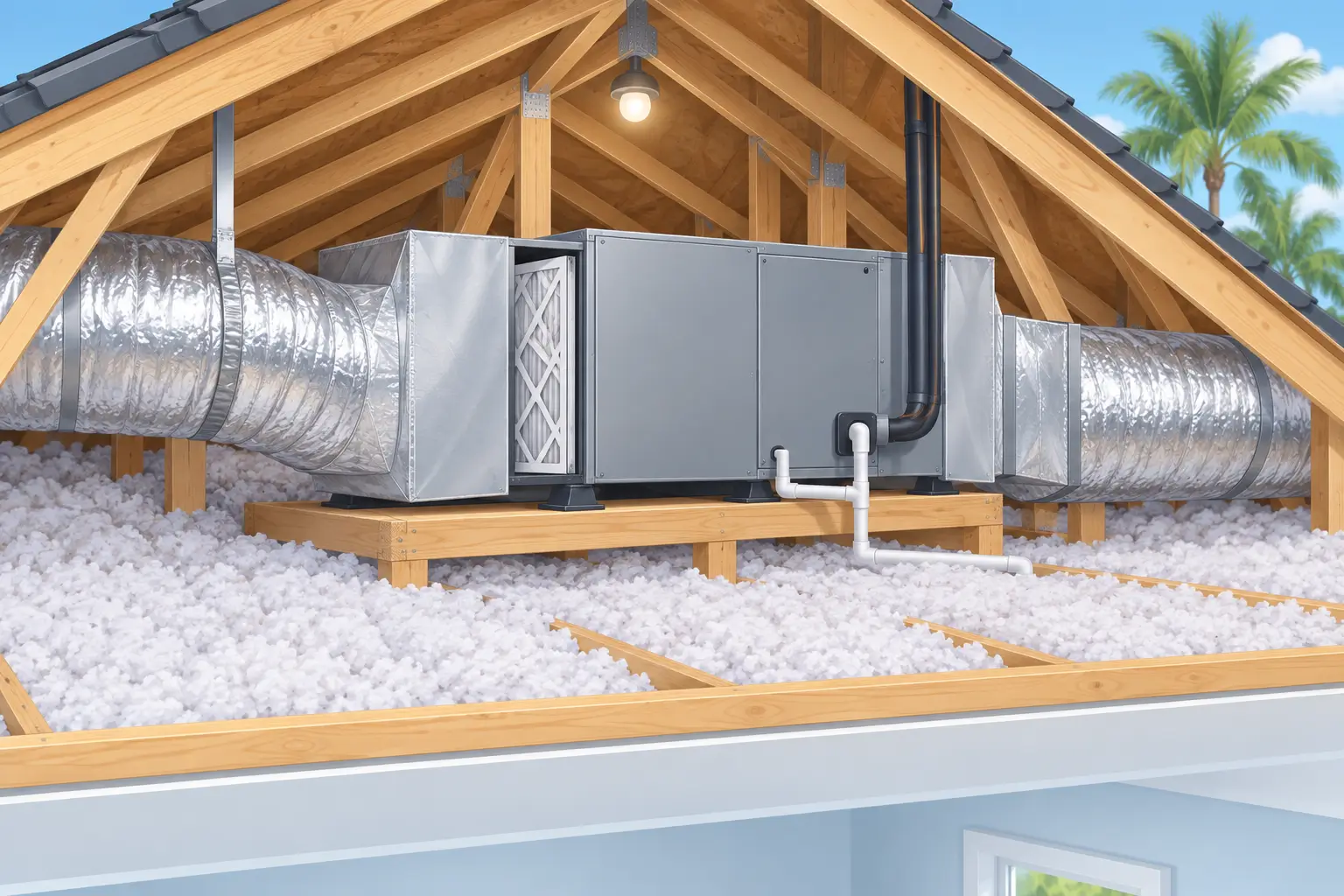
Filter fit connects directly to attic work. Upgrading insulation and sealing leaky air ducts reduces heat gain and air leaks, but a loose filter creates a small leak right at the air handler. If dust has already built up in the ductwork, professional duct cleaning gives a new filter a clean start. A sealed filter is also the foundation for odor and dust control at the vents.
Once the fit is right, choose the rating. MERV ratings describe how well a filter captures particles between 0.3 and 10 microns. The EPA's explanation of MERV ratings recommends MERV 13 or as high as your system fan and filter slot can accommodate. For most homes, MERV 8 gives balanced filtration without restricting airflow. Pet owners may want MERV 11 for capturing pet dander, while MERV 13 delivers higher-efficiency filtration for purer air. If you step up, learn how to reduce noise and airflow issues. Our guide to choosing the right air filter MERV rating for Jupiter, FL homes covers the local trade-offs.
Supporting Statistics: Why Filter Fit Matters in Florida Homes
1. AC Is a Top Energy Cost in Florida's Climate
94% of households in the hot-humid region, which includes South Florida, use air conditioning.
27% of home energy spending there goes to cooling, more than double the 12% national share.
Why it matters: Your filter protects the system you spend the most to run.
Source: U.S. Energy Information Administration
2. A Clean Filter Cuts AC Energy Use by 5% to 15%
Replacing a dirty, clogged filter can lower AC energy use by 5% to 15%.
When airflow is blocked, air can bypass the filter and coat the evaporator coil with dirt.
Why it matters: A loose filter creates the same bypass path. An annual HVAC tune-up catches coil buildup early.
Source: U.S. Department of Energy
3. Leaky Ducts Lose 20% to 30% of Their Air
A typical home loses 20% to 30% of duct airflow to leaks and poorly connected ducts.
Ducts in an attic are a common warning sign of poor duct performance.
Why it matters: Sealed attic ducts and a snug filter close leaks at both ends of the system.
Source: ENERGY STAR
Where to Find a Replacement 13.25x17.75x1 Filter
Because this size is uncommon, local shelves rarely stock it. Filterbuy, an American filter manufacturer, lists both nominal and actual dimensions for hundreds of sizes. The 13.25x17.75x1 air filter in MERV 8 through 13 shows its actual size of 13.25 x 17.75 x 0.75 inches. Readers in Canada can order the same dust-capturing protection from a Canadian storefront.
If your measurements show a different size, major retailers carry the same pleated filters. Online, look for dust-trapping pleated filters or everyday dust defense. In stores, look for reliable MERV 8 protection or pollen-trapping pleated media. Match the listed actual size to your old frame.
Essential Resources on “13.25x17.75x1 Air Filter”: 7 Trusted Guides for Fit and Florida Efficiency
1. Get the Right Fit and Replacement Schedule
The EPA Guide to Air Cleaners in the Home covers snug fit and replacement timing.
2. Decode MERV Ratings in Minutes
The EPA's What Is a MERV Rating? page shows which particle sizes each rating captures.
3. Protect Your AC Coil and Cut Cooling Costs
The U.S. Department of Energy's air conditioner maintenance guide explains how bypassed filters send dust onto the coil.
4. Build a Simple Filter-Check Habit
ENERGY STAR's Heat & Cool Efficiently guide recommends monthly checks and replacement at least every three months.
5. Stop Losing Cooled Air Through Attic Ducts
ENERGY STAR's duct sealing guide explains why attic ducts should be sealed first.
6. Control Humidity in Florida Homes
The UF/IFAS Extension guide to energy-efficient air conditioning covers humidity control and filter access.
7. Match Your MERV Rating to Your Jupiter Home
This guide to balancing filtration and airflow in Jupiter homes helps you choose.
Glossary
Nominal size: The rounded size used to name and sell an air filter, such as 13.25x17.75x1.
Actual size: The true physical dimensions of a filter, such as 13.25 x 17.75 x 0.75 inches.
Filter bypass: Air that flows around a filter instead of through it, usually due to a wrong-size or poorly seated filter.
Filterbuy: A U.S. manufacturer and online retailer of HVAC air filters, based in Talladega, Alabama, that also makes uncommon and custom sizes.
Frequently Asked Questions
Is a 13.25x17.75x0.75 filter the same as a 13.25x17.75x1?
Yes. It is the same filter, described by its actual depth. Both fit a slot designed for a 13.25x17.75x1 filter.
Can I use a 14x18x1 filter instead of a 13.25x17.75x1?
No. A 14x18x1 is larger than the slot and must be bent to fit, which breaks the seal.
How often should I replace a 13.25x17.75x1 air filter?
Manufacturers typically recommend every 60 to 90 days. Filterbuy suggests about 90 days for most homes and 60 with pets or allergies. Monthly checks add allergy season protection.
Which way does the arrow on an air filter point?
The airflow arrow points toward the blower, usually away from the return grille.
Your Next Step
Pull your filter today and write its size on the cabinet. Then run the daylight test. If you would rather not track it yourself, ask about a regular maintenance plan that includes filter checks.
Learn more about HVAC Care from one of our HVAC solutions branches…
Filterbuy HVAC Solutions - Miami FL - Air Conditioning Service
1300 S Miami Ave Apt 4806 Miami FL 33130
(305) 306-5027
https://maps.app.goo.gl/Ci1vrL596LhvXKU79